


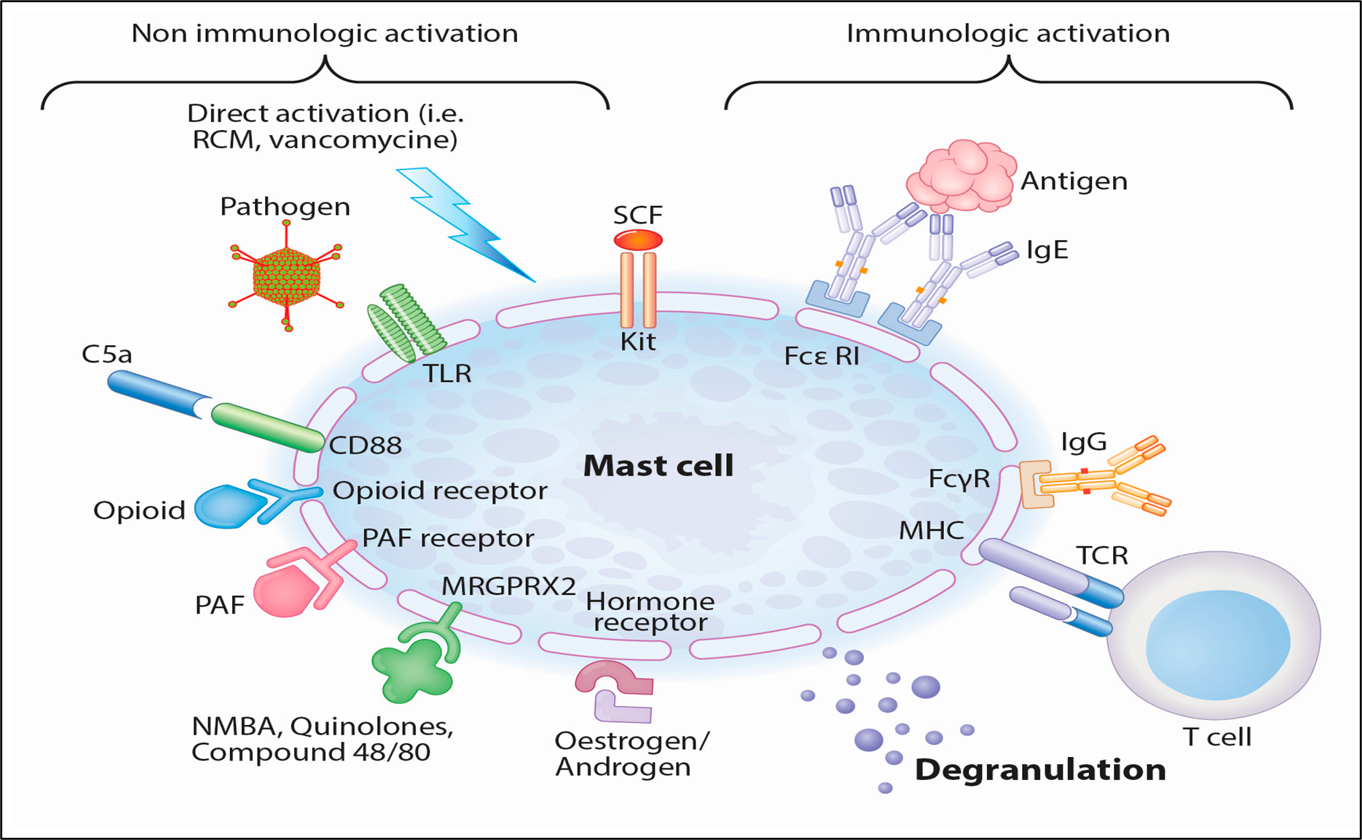
Mast Cells are tissue white blood cells, found in all parts of the body
They are functionally and phenotypically heterogeneous. They are a key part of the innate immune system with a role in immune defence, patrolling linings of mucosal surfaces of organs: the host-environment interface
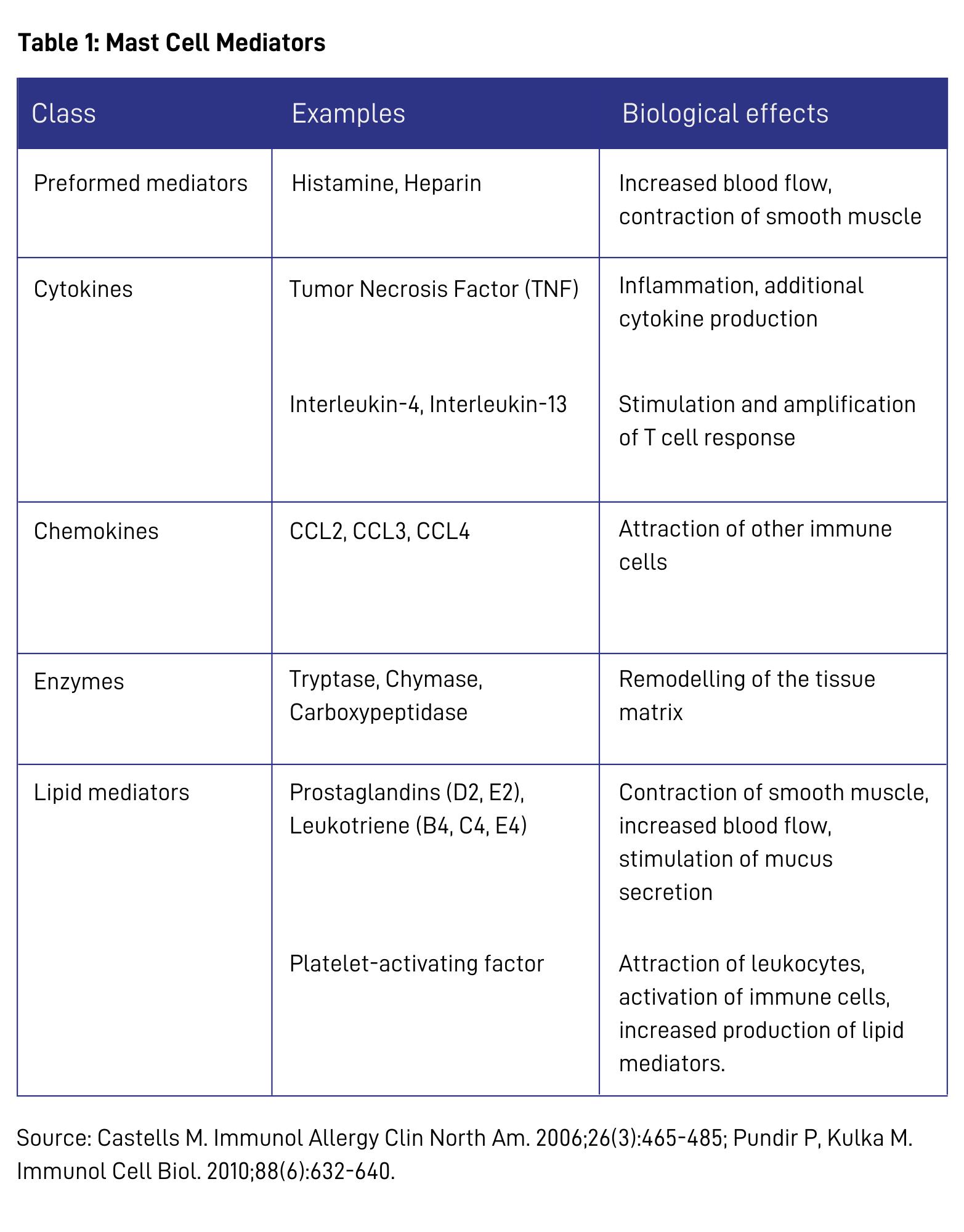
In response to triggers mast cells release a range of mast cell mediators. (See image to the left)
Mast cells contain and produce many different chemical mediators, each with different effects throughout the body. Some are stored within the mast cell and can be released almost immediately, while others are newly produced following activation and released over minutes to hours.
This helps explain why the effects of mast cell activation can be rapid, wide-ranging and sometimes prolonged.
Preformed Mediators (released within minutes):
These mediators are already stored inside mast cell granules and can be released very rapidly when mast cells are activated.
- Histamine – released almost immediately. It can cause vasodilation, itching and flushing, increased gastric acid secretion, and bronchoconstriction.
- Tryptase – a mast-cell protease involved in inflammation and tissue remodelling.
- Heparin – has anticoagulant properties and can influence inflammatory pathways, including the bradykinin system, which may contribute to swelling and angioedema.
- Other proteases – enzymes released from mast cells that can affect surrounding tissues and inflammatory modulation.
Newly synthesised mediators (produced after activation)
Following activation, mast cells can also manufacture and release additional mediators. These develop over minutes to hours and can prolong or amplify the inflammatory response.
- Leukotrienes – produced rapidly following activation (in under 15 minutes) and can cause airway and other smooth-muscle contraction, increased vascular permeability and inflammation.
- Prostaglandins – contribute to inflammation, pain, flushing, vascular permeability and fever.
- Cytokines and chemokines – generally have a more delayed effect (up to 3 hours). They act as signalling molecules, communicating with other immune cells and recruiting them to sites of inflammation.
This helps explain why mast cell activation can produce both immediate symptoms and symptoms that develop or continue over the following hours.

Become a friend
Sign up to become a Friend of Mast Cell Action so we can keep you up to date on our progress and on how to get involved in our latest campaigns and initiatives.
Donate
Mast Cell Action relies entirely on the generosity of people like you. Please make a donation now and together we can make a difference to those affected by MCAS.