

What Are Mast Cells?
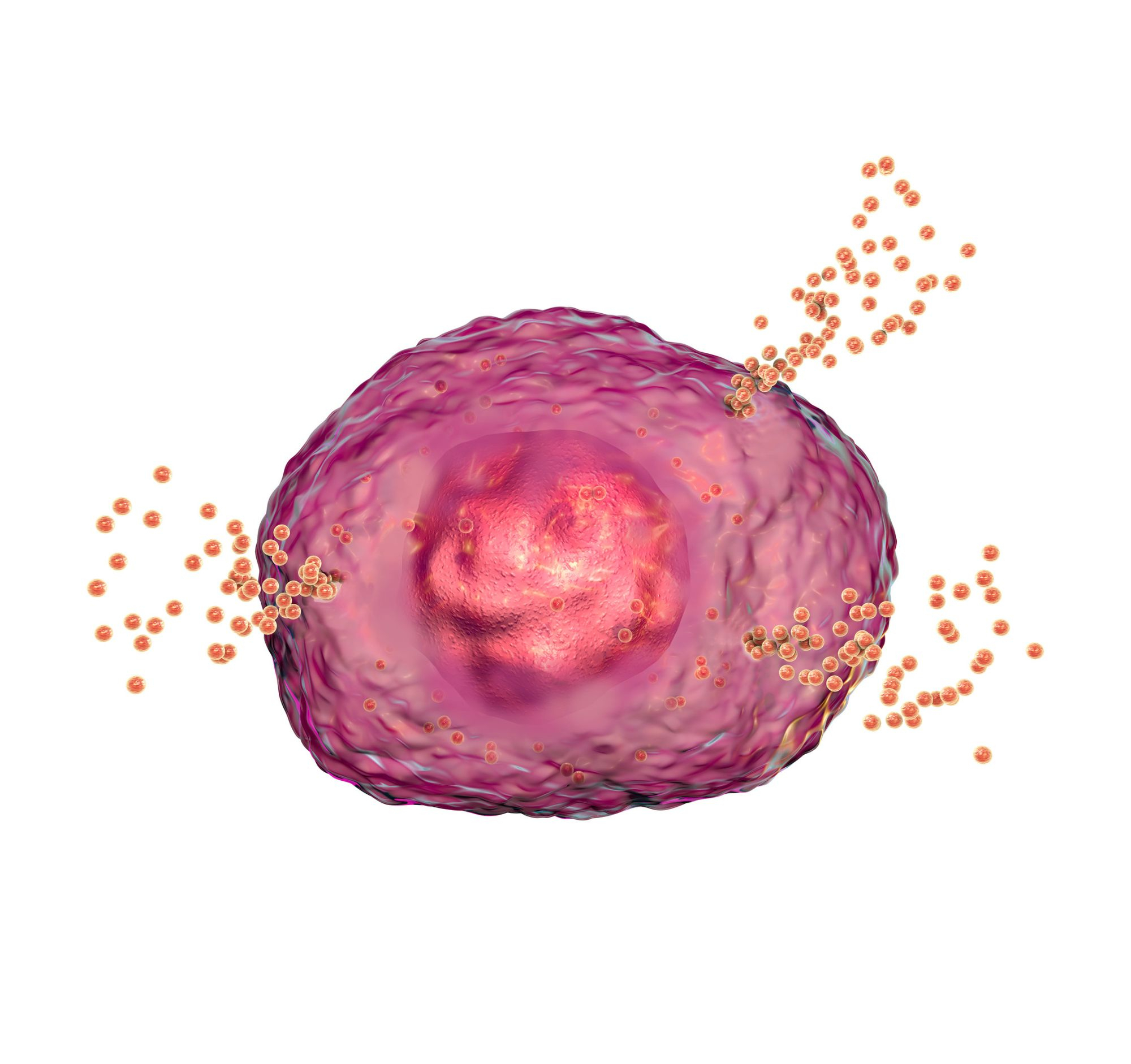
Mast cells are a normal and important part of your immune system. They are found all over the body, especially in places that come into contact with the outside world, such as:
- Skin
- Lungs and airways
- Digestive system
- Nose and sinuses
- Around blood vessels and nerves
Their job is to help protect you. They act as “first responders,” helping your body react quickly to infections, injuries, and allergens.
When they work properly, mast cells are helpful and protective. When they become overactive or dysregulated, they can release chemicals too easily or too often and that’s when symptoms can happen.

What Are Mediators?
Mediators are the chemical messengers that mast cells release. Think of mediators as alarm signals. When mast cells detect something they believe is a threat, they release these chemicals to tell the body to respond.
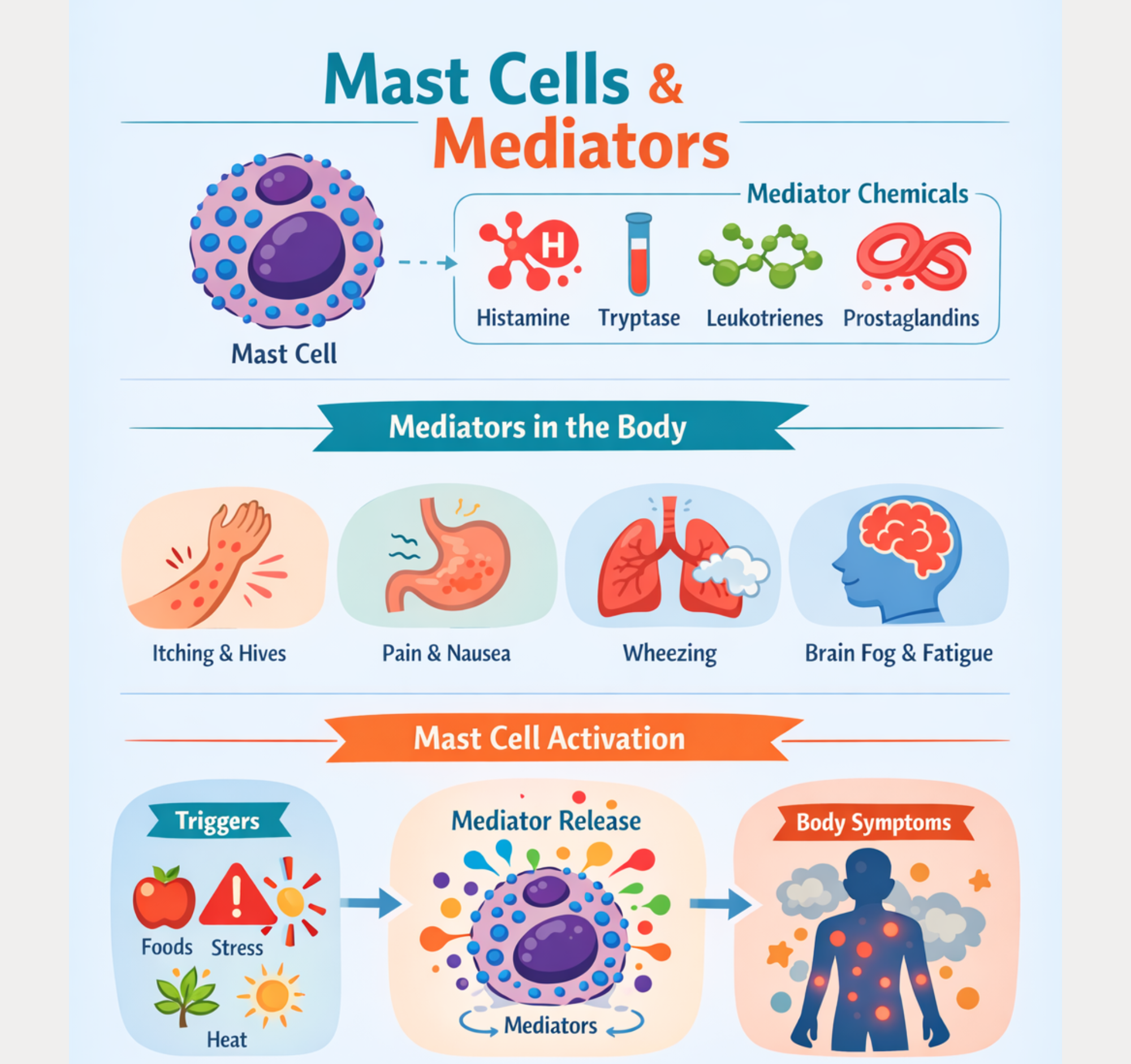
Each of these chemicals has a different effect on the body. Some of the main mediators include:
- Histamine
- Tryptase
- Prostaglandins
- Leukotrienes
- Cytokines
What Do Mediators Do in the Body?
Mediator chemicals are powerful and they can affect many systems.
Here’s how some common mediators can affect you:
Blood Vessels: Widening of blood vessels, flushing, drop in blood pressure, dizziness or fainting.
Airways: wheezing, tight chest, shortness of breath.
Skin: Itching, hives, swelling.
Gut: Nausea, abdominal pain, diarrhoea, acid reflux.
Brain and Nervous System: Headaches, brain fog, fatigue, anxiety-like symptoms.
Because mast cells live throughout the body, mediator release can cause multi-system symptoms, meaning several parts of the body can be affected at once.

What Happens in Mast Cell Activation Syndrome (MCAS)?
In conditions like Mast Cell Activation Syndrome (MCAS), mast cells release mediators inappropriately or excessively.
This release can be:
- Triggered by things like foods, temperature changes, stress, infections, medications, or fragrances
- Unpredictable
- Different from one person to another
Sometimes mediator release is sudden and severe (such as in anaphylaxis). Other times, it may be more chronic and fluctuating, causing ongoing daily symptoms.

Why Do Mediators Matter for Testing?
When doctors test for mast cell conditions, they are often looking for signs of mediator release.
This might include:
- Blood tests (such as serum tryptase)
- 24-hour urine tests for mediator breakdown products (like histamine metabolites or prostaglandins)
However, mediator levels can rise and fall quickly, which means tests may be normal if they’re not done during a flare.
That’s why diagnosis doesn’t rely on tests alone. Your symptoms, medical history, and response to treatment are all important pieces of the picture.

Why Understanding Mast Cells Helps
Learning about mast cells and mediators can help you:
- Understand why symptoms affect multiple systems
- Recognise patterns and triggers
- Feel more confident discussing testing and treatment with healthcare professionals
- Realise that your symptoms have a biological basis
Mast cells are not “bad” cells, they are protective cells that have become dysregulated.
With the right support and management, many people can reduce mediator-related symptoms and improve quality of life.
Become a friend
Sign up to become a Friend of Mast Cell Action so we can keep you up to date on our progress and on how to get involved in our latest campaigns and initiatives.
Donate
Mast Cell Action relies entirely on the generosity of people like you. Please make a donation now and together we can make a difference to those affected by MCAS.