


What is Mast Cell Activation Syndrome? Etiology and Pathology
Mast Cell Activation Syndrome (MCAS) is a mast cell disorder. There is primary, secondary and idiopathic.
It is distinct from Systemic Mastocytosis because there is no excess accumulation of mast cells, and distinct from primary mast cell disorders because it is not IgE mediated.
It is characterised by inappropriate or excessive mast cell activation leading to a wide range of inflammatory and allergy-like symptoms.

MCAS affects both children and adults and may present at any age. Symptoms are often long-standing but under-recognised, with many patients reporting mild or intermittent symptoms from childhood before a sudden escalation in severity.
In some cases, a clear precipitating event precedes deterioration, such as:
- Viral or bacterial infection
- Surgery or medical procedures
- Physical or psychological stress

Others are unwell from birth or early childhood with no clear precipitating event.
The condition is frequently characterised by unpredictable, relapsing–remitting symptoms involving multiple organ systems.
Mast cells release hundreds of biologically active mediators when triggered; the full extent of their effects is an evolving area of research.
Preformed mediators are released immediately, while newly synthesised mediators are released over minutes to hours after exposure to a trigger.

MCAS in clinical practice
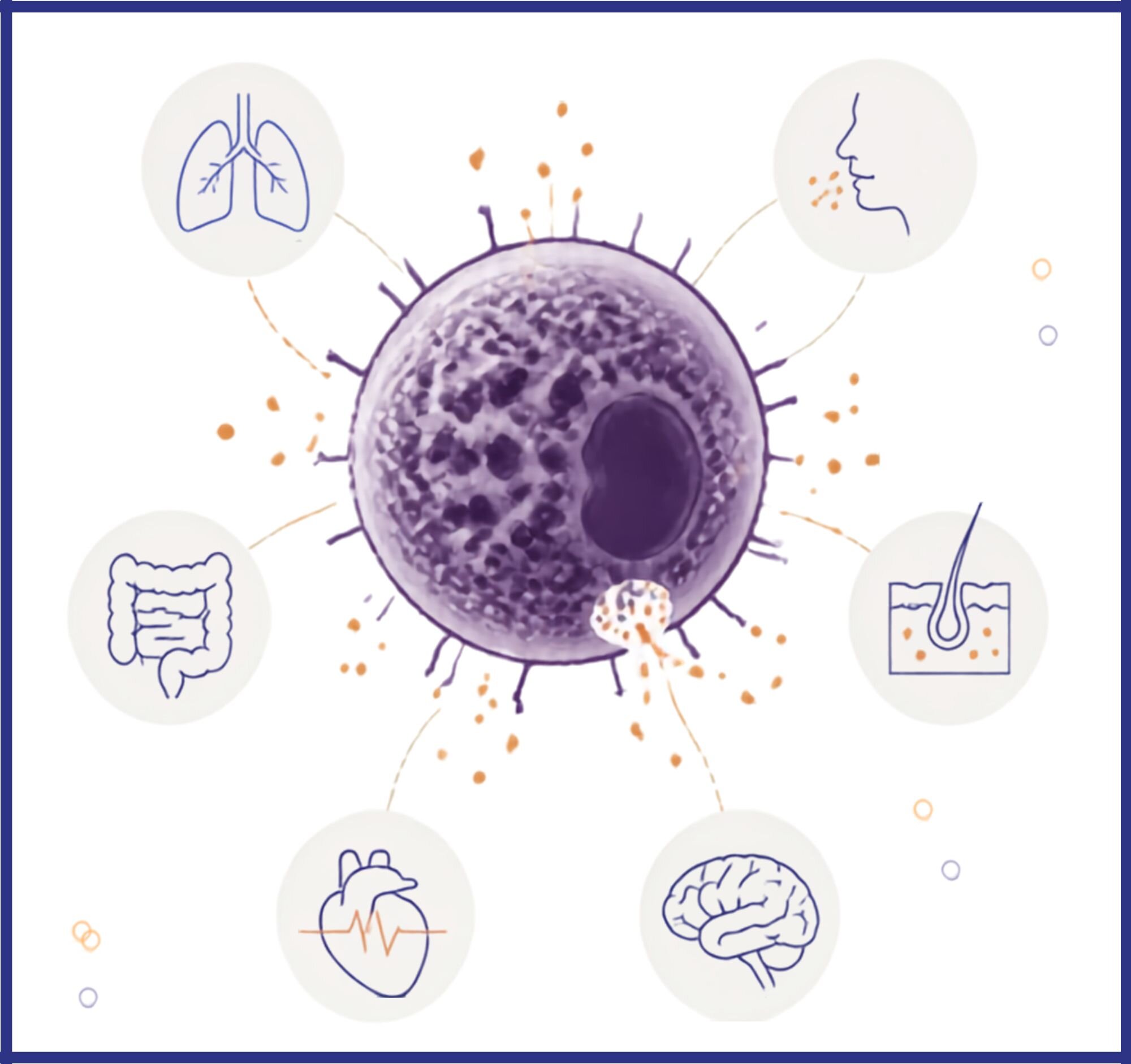
MCAS can present in many different ways. Patients experience symptoms affecting several body systems, which typically fluctuate over time and may not initially appear to be connected. Presentations can include flushing, urticaria and itching; gastrointestinal symptoms; respiratory symptoms; cardiovascular symptoms such as palpitations or presyncope; headaches, fatigue and cognitive symptoms; and musculoskeletal or genitourinary symptoms.
Some patients experience recognisable allergy-type episodes, while others have predominantly chronic or fluctuating multisystem symptoms. Explore further information about symptoms and clinical presentation here.

When might you consider MCAS?
MCAS may warrant consideration where a patient has otherwise unexplained, recurrent or persistent symptoms affecting multiple organ systems, particularly where symptoms fluctuate, occur in episodes or appear to be triggered by foods, medications, infections, temperature, exertion, stress or other exposures. Patients may have accumulated several apparently unrelated diagnoses before a possible unifying explanation is considered and can also have persistent or recurrent symptoms for which routine investigations have been normal, inconclusive or do not fully explain the severity or breadth of symptoms. There may be a family history of similar multisystem symptoms or unexplained reactions.

Multiple diagnoses across different specialties, for example irritable bowel syndrome, spontaneous urticaria/angioedema, migraine, PoTS, vasovagal syncope, and interstitial cystitis, where these diagnoses do not fully explain the patient's overall multisystem presentation.
No single feature is diagnostic of MCAS. It is the overall pattern, particularly recurrent symptoms across multiple organ systems and the relationship between symptoms and potential triggers, that may indicate that further investigation for mast cell activation is appropriate.
If you suspect that you patient may have MCAS, you can read more about diagnosing MCAS here.
Become a friend
Sign up to become a Friend of Mast Cell Action so we can keep you up to date on our progress and on how to get involved in our latest campaigns and initiatives.
Donate
Mast Cell Action relies entirely on the generosity of people like you. Please make a donation now and together we can make a difference to those affected by MCAS.