

Healthcare & Diagnosis

Comprehensive Guide to MCAS for Primary Care Physicians
This comprehensive guide for the diagnosis and management of MCAS in Primary Care is designed to help GPs to recognise and treat MCAS with confidence. We hope that this guide will serve as a useful, practical tool to help you to support MCAS patients. The 1-page Recognising and Managing MCAS Overview on P4 is a useful place to start if you are looking for a quick summary, and a full-page downloadable version of the flowchart can also be found on our website here https://www.mastcellaction.org/articles/recognising-and-managing-mcas-in-primary-care-overview-flow-chart

Anaesthetic and Surgical Guide - Planning for surgery for people with Mast Cell Activation Syndrome
We understand that planning for surgery or any procedure requiring anaesthesia can feel daunting when you have MCAS. These situations can bring uncertainty - but with the right preparation and support, they can be managed safely. This guide, developed by members of our Medical Advisory Board, aims to help you feel more confident and informed about what to expect.

A Quick Guide to MCAS
A handy 2 page Quick Guide to MCAS. An easy to read and understand overview of mast cells, MCAS symptoms, triggers, management, treatment and the histamine bucket theory.

EDS and MCAS from an Osteopathic perspective: How can Osteopathy help you?
PowerPoint slides from Rory Boggett's webinar 'EDS and MCAS from an Osteopathic perspective: How can Osteopathy help you?'.

Speaking to Your GP: Language and Tips for Effective Communication
This guide has been created to help you communicate more confidently and effectively with your GP. It offers practical language suggestions that can help you explain your symptoms, request support, and build a more collaborative relationship, whether you have a confirmed diagnosis or are still seeking answers.
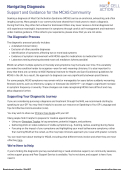
Navigating Diagnosis: Support and Guidance for the MCAS Community
This guide is designed to support individuals in the MCAS community who are navigating the challenges of diagnosis.

MCAS and Related Conditions - Special Consideration for Anaesthesia Surgery with Dr. Anton Krige
PowerPoint slides from our Dr Anton Krige's webinar 'MCAS and Related Conditions - Special Consideration for Anaesthesia Surgery with Dr. Anton Krige'. You can find the recording of this session on our YouTube channel.

How to be Heard: Advocating for yourself within the NHS
PowerPoint slides from Vicky Pearson's webinar 'How to be Heard: Advocating for yourself within the NHS'. You can find the recording of this session on our YouTube channel.
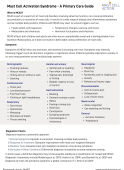
Mast Cell Activation Syndrome - A Primary Care Guide
A primary care guide to Mast Cell Activation Syndrome. It outlines common triggers, diagnostic criteria, and key symptom patterns affecting various body systems, helping clinicians recognise and differentiate MCAS from other conditions.
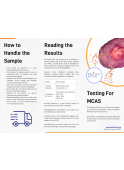
MCAS Testing for Healthcare Professionals
This leaflet details some of the tests used to diagnose MCAS, how to order and handle a sample and how to read the results.
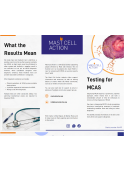
MCAS Testing
This leaflet documents some of the tests that may be used to diagnose MCAS and explains how to read the results.
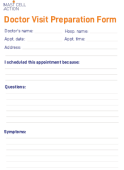
Doctor visit preparation form
A form designed to help you to plan the questions you would like to ask and symptoms you would like to discuss at medical appointments.
Become a friend
Sign up to become a Friend of Mast Cell Action so we can keep you up to date on our progress and on how to get involved in our latest campaigns and initiatives.
Donate
Mast Cell Action relies entirely on the generosity of people like you. Please make a donation now and together we can make a difference to those affected by MCAS.