

Articles
Mast Cell Activation Disorder and Postural Orthostatic Tachycardia Syndrome: A Clinical Association
Ritsuko Kohno, David S Cannom, Brian Olshansky, Shijun Cindy Xi, Darshan Krishnappa, Wayne O Adkisson, Faye L Norby, Artur Fedorowski, David G Benditt (2021). This study examines the frequency with which findings suggesting mast cell activation (MCA) disorder occurred in patients diagnosed with postural orthostatic tachycardia syndrome (POTS). It notes a broader symptom profile in MCA cases, including allergic and gastrointestinal issues. It identifies prostaglandins combined with other markers, such as histamine, as useful but not definitive diagnostic indicators and concludes that MCA should be considered in POTS-like cases with atypical symptoms.
Mast cell activation symptoms are prevalent in Long-COVID
Leonard B Weinstock, Jill B Brook, Arthur S Walters, Ashleigh Goris, Lawrence B Afrin, Gerhard J Molderings (2021). This study researched the prevalence of MCAS symptoms post-COVID. The assessment was done through an online questionnaire via a support group. The study observed that MCA symptoms were increased in people with long COVID.
Safe administration of chemotherapy in mast cell activation syndrome
M P Lythgoe, J Krell, I A McNeish, L Tookman (2021). This article details a case report of a 59-year-old MCAS patient with endometrial cancer who received chemotherapy, with the aim to provide a framework for safer chemotherapy administration. It discusses the challenges of administering chemotherapy in patients with MCAS, highlighting hypersensitivity risks of carboplatin and paclitaxel, the role of desensitization protocols, and the need for tailored strategies to safely treat high-risk patients.
Selecting the Right Criteria and Proper Classification to Diagnose Mast Cell Activation Syndromes: A Critical Review
Theo Gülen, Cem Akin, Patrizia Bonadonna, Frank Siebenhaar, Sigurd Broesby-Olsen, Knut Brockow, Marek Niedoszytko, Boguslaw Nedoszytko, Hanneke N G Oude Elberink, Joseph H Butterfield, Wolfgang R Sperr, Ivan Alvarez-Twose, Hans-Peter Horny, Karl Sotlar, Juliana Schwaab, Mohamad Jawhar, Roberta Zanotti, Gunnar Nilsson, Jonathan J Lyons, Melody C Carter, Tracy I George, Olivier Hermine, Jason Gotlib, Alberto Orfao, Massimo Triggiani, Andreas Reiter, Karin Hartmann, Mariana Castells, Michel Arock, Lawrence B Schwartz, Dean D Metcalfe, Peter Valent (2021). This article highlights the risk of misdiagnosis or over-diagnosis when applying less stringent criteria for the diagnosis of MCAS. It advocates for a stricter use of the Vienna's consensus criteria for the diagnosis of Mastocytosis and MCAS, in particular the use of tryptase level.
COVID-19 infection in patients with mast cell disorders including mastocytosis does not impact mast cell activation symptoms
Matthew P Giannetti, Emily Weller, Iván Alvarez-Twose, Inés Torrado, Patrizia Bonadonna, Roberta Zanotti, Daniel F Dwyer, Dinah Foer, Cem Akin, Karin Hartmann, Tiago Azenha Rama, Wolfgang R Sperr, Peter Valent, Cristina Teodosio, Alberto Orfao, Mariana Castells (2021). This article highlights how Covid-19 infection in patients with MCAS or mastocytosis does not activate the mastcell nor causes a flare up of mastocytosis symptoms. This finding aligns with the lack of exacerbation of asthma by Covid infection.
Safety of COVID-19 vaccination in patients with mastocytosis and monoclonal mast cell activation syndrome
Rayan Kaakati, Dilawar Khokhar, Cem Akin (2021). This is a retrospective study about the safety of COVID vaccine in patients with different forms of mastocytosis and a history of anaphylaxis. The study highlights that a history of anaphylaxis should not exclude people from vaccination but precautions should be taken to limit the risks (continue current medication, premedication with antihistamine and access to Epipen if normally carried)
mRNA COVID-19 vaccine is well tolerated in patients with cutaneous and systemic mastocytosis with mast cell activation symptoms and anaphylaxis
Tiago Azenha Rama, André Moreira, Mariana Castells (2021). This article is a case report of two individuals with cutaneous and systemic mastocytosis who underwent the COVID-19 vaccination with premedication and did not experience side effects. This article reinforce how understanding mastocytosis and taking the appropriate step can allow safe vaccination practice.
Persistent Antiphospholipid Antibodies, Mast Cell Activation Syndrome, Postural Orthostatic Tachycardia Syndrome and Post-COVID Syndrome: 1 Year On
Jill R Schofield (2021). This article is a case report about an individual with long COVID that developed POTs, antiphospholid syndrome (APS) and clinical manifestations of MCAS. The individual had potentially mild MCAS symptoms before the Covid infection. The article highlights how treating MCAS, POTs and anti-phospholid with targeted medications can improve clinical manifestations and function. This patient history supports the hypothesis that MCAS could increase the risk of developing dysautonomia following COVID-19 infection.
Mast Cell Activation Syndrome: A Primer for the Gastroenterologist
Leonard B Weinstock, Laura A Pace, Ali Rezaie, Lawrence B Afrin, Gerhard J Molderings (2021). This article reviews gastrointestinal comorbidities in MCAS, including links to conditions such as Postural Orthostatic Tachycardia Syndrome (POTS) and hypermobile Ehlers_Danlos Syndrome (hEDS). It finds that gastrointestinal symptoms in MCAS are inflluenced by mast cell activation, autonomic dysfunction, and connective tissue abnormalities, requiring comprehensive diagnostic and therapeutic approaches.
Effect of Dietary Fiber and Metabolites on Mast Cell Activation and Mast Cell-Associated Diseases
Jelle Folkerts, Ralph Stadhouders, Frank A Redegeld, See-Ying Tam, Rudi W Hendriks, Stephen J Galli, Marcus Maurer (2018). This article provides an overview of current understandings surrounding the effects of dietary fibre on the regulation of mast cell activity and mast cell-associated diseases. It discusses the potential therapeutic effects of fibre and its metabolites (including short-chain fatty acids) on mast-cell associated airway inflammation and allergic diseases. It proposes further research to explore the role of dietary fibre in preventing and treating conditions associated with mast cell activation.
Inhibitory effects of curcumin on passive cutaneous anaphylactoid response and compound 48/80-induced mast cell activation
Yun-Ho Choi 1, Guang-Hai Yan, Ok Hee Chai, Chang Ho Song (2010) This article discusses the inhibitory effects of curcumin (the active component of turmeric) on mast cell activation and histamine release in mast cell-mediated allergic responses. It highlights curcumin’s mechanisms, including suppression of calcium influx and enhancement of intracellular cAMP levels, which reduce mast cell degranulation and histamine release. The findings suggest curcumin’s potential therapeutic role in managing mast cell-associated allergic diseases.
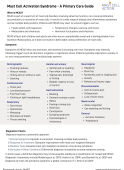
Mast Cell Activation Syndrome - A Primary Care Guide
A primary care guide to Mast Cell Activation Syndrome. It outlines common triggers, diagnostic criteria, and key symptom patterns affecting various body systems, helping clinicians recognise and differentiate MCAS from other conditions.
Understanding MCD by Roselle P. O'Brien LMHC
A 'Not-Just-For-Therapists' Guide....." This is written as a guide for therapist’s to help them understand Long Covid, Mast Cell Activation Syndrome (MCAS), Mast Cell Disorders (MCD), Chemical Sensitivities and Environmental Illness. However, it is not just for therapists, and others may also find it very useful.

Mandalas Colouring Book with Affirmations
Relaxing and creative activities like mandala colouring can help foster mindfulness and calm a busy mind. Why not spend some time colouring in these beautiful mandalas, drawn by talented Mast Cell Action supporter Ivy Lewis, and lose yourself in your own creative vision. As each colour fills the spaces in this book, may your heart find calm, your mind find focus, and your spirit find strength. You are your own masterpiece.

Arranging education for children who cannot attend school because of health needs
This guidance outlines how local authorities and schools can best support children who cannot attend school because of physical or mental health needs.
Navigating MCAS together - Mast Cell Activation Syndrome Support Guide for Loved Ones
This guide is for those who are supporting a loved-one with MCAS, and includes advice on maintaining your own physical and emotional health, as well as practical guidance on how you can support your loved-one.
Introduction to Water Purifiers
Handout on different types of water purifiers, created by Deborah Bircham
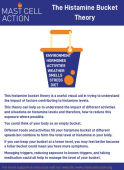
The Histamine Bucket Theory
This histamine bucket theory is a useful visual aid in trying to understand the impact of factors contributing to histamine levels.
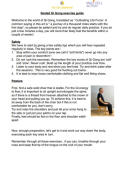
Seated Qigong Guide
This is a seated Qigong guide which focusses on posture, Neck, Shoulders and Spine.

Mindfulness, Mindful Breathing and Mast Cells
This guide explains the benefits of Mindfulness and breathwork and provides short exercises to try.
Become a friend
Sign up to become a Friend of Mast Cell Action so we can keep you up to date on our progress and on how to get involved in our latest campaigns and initiatives.
Donate
Mast Cell Action relies entirely on the generosity of people like you. Please make a donation now and together we can make a difference to those affected by MCAS.