

Articles
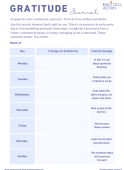
Gratitude Handout
Use this journal however feels right for you. There’s no pressure to write every day or find something profound. Some days, it might be a kind word from a friend, a moment of peace, or simply managing to eat a safe meal. These moments matter. You matter.
Potato lectin activates basophils and mast cells of atopic subjects by its interaction with core chitobiose of cell-bound non-specific immunoglobulin E
S. N. Pramod, Y. P. Venkatesh and P. A. Mahesh (2007). This study addresses the role of potato lectin (STA) in activating mast cells and basophils through non-specific binding to IgE and FcεR receptors. It studies the effect of STA on atopic and non-atopic subjects, and finds that it may cause non-allergic hypersensitivity in some atopic individuals, despite not being a ‘true allergen’. Therefore, it suggests that lectins in foods like potatoes and tomatoes may contribute to symptoms of allergic reactions (e.g. asthma) in STA-sensitive individuals.

Retrain Your Brain, Retrain Your Mast Cells
PowerPoint slides from Roselle O'Brien's webinar 'Retrain Your Brain, Retrain Your Mast Cells'. You can find the recording of this session on our YouTube channel.
Foods and Inflammation
PowerPoint slides from Deborah Bircham's from Live Well with Chronic Illness webinar 'Foods and Infammation'. You can find the recording of this session on our YouTube channel.

Your Safe Haven at Home
PowerPoint slides from Roselle O Brien's webinar on 'Your Safe Haven at Home'. You can find the recording of this session on our YouTube channel.

MCAS and Environmental Pollution the Toxic Truth
PowerPoint slides from Deborah Bircham's from Live Well with Chronic Illness' webinar 'MCAS and Environmental Pollution the Toxic Truth'. You can find the recording of this session on our YouTube channel.
What is detoxing and how might it help with MCAS?
PowerPoint slides from Deborah Bircham's from Live Well with Chronic Illness' webinar on 'What is detoxing and how might it help with MCAS?'. You can find the recording of this session on our YouTube channel.
Stress and Mast Cells
PowerPoint slides from Roselle O Brien's webinar on 'Stress and Mast Cells'. You can find the recording of this session on our YouTube channel.

Pillars of Health
PowerPoint slides from Deborah Bircham's from Live Well with Chronic Illness's webinar 'Pillars of Health'.

The Neuroscience of Mindfulness
PowerPoint slides from Deborah Bircham's from Live well with Chronic Illness's webinar 'The Neuroscience of Mindfulness', You can find the recording of this session on our YouTube channel.

How to Fight On in Tough Times – Tools and Tips to Foster Mental Resilience
PowerPoint slides from Deborah Bircham's from Live Well with Chronic Illness' webinar 'How to Fight On in Tough Times – Tools and Tips to Foster Mental Resilience'. You can find the recording of this session on our YouTube channel.

How to be Heard: Advocating for yourself within the NHS
PowerPoint slides from Vicky Pearson's webinar 'How to be Heard: Advocating for yourself within the NHS'. You can find the recording of this session on our YouTube channel.

How to Sleep Well
PowerPoint slides from Deborah Bircham's from Live Well with Chronic Illness webinar 'How to Sleep Well'. You can find the recording of this session on our YouTube channel.

Vagus Nerves and Mast Cells
PowerPoint slides from Roselle O'Brien's webinar 'Vagus Nerves and Mast Cells'. You can find the recording of this session on our YouTube channel.

Immune Health - How to Fight off Bugs and Viruses Naturally
Powerpoint slides from Deborah Bircham's from Live Well with Chronic Illness' webinar 'Immune Health - How to Fight off Bugs and Viruses Naturally' . You can find the recording of this session on our YouTube channel.
Mast Cell Activation Syndrome: A Research Update
Kathleen Doheny (2023). This is a short informative article explaining the difference between clonal and non-clonal mast cell activation syndrome. It focuses on presentation of each and helpful investigations for a diagnosis. There are also useful links to scientific articles that go more in depth in the detail of the non-clonal form.
A Puzzling Mast Cell Trilogy: Anaphalaxis, MCAS, and Mastocytosis
Theo Gülen (2023). This article outlines the difficulties associated with diagnosing three interrelated conditions; anaphylaxis, MCAS, and mastocytosis. It outlines each in turn, to then discuss their overlap and clinical features of their presentation alongside other mast-cell related disorders. It concludes by calling for future research aimed at identifying new biomarkers to distinguish patients with each disorder and the treatment of patients in specialized centres due to the complexity of the conditions.
Neuropsychiatric Manifestations of Mast Cell Activation Syndrome and Response to Mast-Cell-Directed Treatment: A Case Series
Leonard B. Weinstock, Renee M. Nelson and Svetlana Blitshteyn (2023). This is a small study that explores the comorbidity of psychiatric conditions and MCAS. The study includes 8 patients with both a psychiatric and MCAS diagnosis and highlights how, treating MCAS improved the psychiatric symptoms. The study highlights how psychiatric patient's refractory to standard therapy that also have systemic symptoms should be assessed for MCAS. It calls for more studies to investigate the prevalence of MCAS in psychiatric patients not responding to standard treatments to get a better picture of this association and the potential therapeutic benefits for the patients.
Fluoxetine retrains allergic inflammation by targeting an FcɛRI-ATP positive feedback loop in mast cells
Tamara T Haque, Marcela T Taruselli, Sydney A Kee, Jordan M Dailey, Neha Pondicherry, Paula A Gajewski-Kurdziel, Matthew P Zellner, Daniel J Stephenson, H Patrick MacKnight, David B Straus, Roma Kankaria, Kaitlyn G Jackson, Alena P Chumanevich, Yoshihiro Fukuoka, Lawrence B Schwartz, Randy D Blakely, Carole A Oskeritzian, Charles E Chalfant, Rebecca K Martin, John J Ryan (2023). This article outlines a study on mice that tests the effects of the SSRI fluoxetine on IgE-induced activation of mast cells. It discusses how fluoxetine suppresses mast cell activation and ATP secretion, which amplifies IgE responses. The article concludes by suggesting that fluoxetine is a promising candidate for repurposing allergy treatment.
Increased Excretion of Mast Cell Mediator Metabolites During Mast Cell Activation Syndrome
Joseph H Butterfield (2023). This is a retrospective cohort study exploring biomarkers in MCAS diagnosis. While an increase in serum tryptase by 20% plus 2 ng/mL is required for an MCAS diagnosis, there is no agreement on what counts as significant rise in urinary metabolites such as prostaglandin D2, histamine, or leukotriene (which are also linked to MCAS episodes). The study finds that the measurements of all three urinary metabolites together is helpful for diagnosis.
Become a friend
Sign up to become a Friend of Mast Cell Action so we can keep you up to date on our progress and on how to get involved in our latest campaigns and initiatives.
Donate
Mast Cell Action relies entirely on the generosity of people like you. Please make a donation now and together we can make a difference to those affected by MCAS.