
Understanding MCAS, Symptoms & Triggers
MCAS and Pain
PowerPoint slides from Dr Johanna Theron's Webinar 'Pain and MCAS'.
Neuropsychiatric Symtoms in MCAS and Histamine Intolerance
PowerPoint slides from Dr. Clare Ashby webinar 'Nervous System Regulation'.
Urology and MCAS
PowerPoint slides from Camilla Gonzalez's webinar 'Urology and MCAS'.
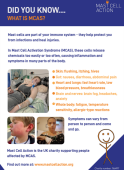
DID YOU KNOW.... What is MCAS?
This poster provides brief facts about MCAS. These are great for sending to friends and family to help them understand or for taking to medical appointments.

DID YOU KNOW.... What can trigger MCAS symptoms?
This poster provides brief facts around Triggers and MCAS. These are great for sending to friends and family to help them understand or for taking to medical appointments.

DID YOU KNOW.... Fragrances can make people ill
This poster provides brief facts around fragrances and MCAS. These are great for sending to friends and family to help them understand or for taking to medical appointments.
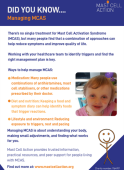
DID YOU KNOW.... Managing MCAS
This poster provides brief facts around managing MCAS. These are great for sending to friends and family to help them understand or for taking to medical appointments.

A Quick Guide to MCAS
A handy 2 page Quick Guide to MCAS. An easy to read and understand overview of mast cells, MCAS symptoms, triggers, management, treatment and the histamine bucket theory.
Pain and the Brain
PowerPoint slides from Deborah Bircham from Live Well with Chronic Illness' Webinar 'Pain and the Brain'.
Understanding Mast Cells, Autoimmune Disorders and Comorbidity
PowerPoint slides from Roselle O'Brien's talk 'Understanding Mast Cells, Autoimmune Disorders and Comorbidities'. You can find the recording of this session on our YouTube channel.

Your Safe Haven at Home
PowerPoint slides from Roselle O Brien's webinar on 'Your Safe Haven at Home'. You can find the recording of this session on our YouTube channel.
MCAS and Environmental Pollution the Toxic Truth
PowerPoint slides from Deborah Bircham's from Live Well with Chronic Illness' webinar 'MCAS and Environmental Pollution the Toxic Truth'. You can find the recording of this session on our YouTube channel.
Stress and Mast Cells
PowerPoint slides from Roselle O Brien's webinar on 'Stress and Mast Cells'. You can find the recording of this session on our YouTube channel.

Vagus Nerves and Mast Cells
PowerPoint slides from Roselle O'Brien's webinar 'Vagus Nerves and Mast Cells'. You can find the recording of this session on our YouTube channel.
Long COVID and the Mast Cell Connection
PowerPoint slides from Roselle O'Brien's webinar 'Long COVID and the Mast Cell Connection'. You can find the recording of this session on our YouTube channel.
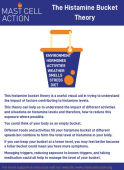
The Histamine Bucket Theory
This histamine bucket theory is a useful visual aid in trying to understand the impact of factors contributing to histamine levels.
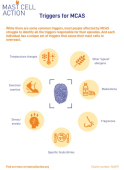
Triggers
This resource details some of the more common triggers of Mast Cell Activation Syndrome.
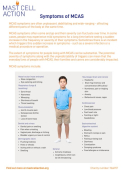
Symptoms of MCAS
This resource details some of the more common symptoms of Mast Cell Activation Syndrome.
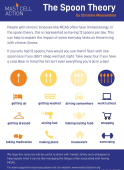
The Spoon Theory
People with chronic illnesses like MCAS often have limited energy. In the spoon theory, by Christine Miserandino, this is represented as having 12 spoons per day. This can help to explain the impact of some everyday tasks on those living with chronic illness.
MCAS Self-management toolkit
This toolkit contains information about substances in food and in the environment that can affect mast cell activity or trigger MCAS symptoms. It also includes practical advice to help you understand and avoid these triggers, as needed.
Become a friend
Sign up to become a Friend of Mast Cell Action so we can keep you up to date on our progress and on how to get involved in our latest campaigns and initiatives.
Donate
Mast Cell Action relies entirely on the generosity of people like you. Please make a donation now and together we can make a difference to those affected by MCAS.