
Wellbeing and Emotional Support

How to Sleep Well
PowerPoint slides from Deborah Bircham's from Live Well with Chronic Illness webinar 'How to Sleep Well'. You can find the recording of this session on our YouTube channel.
Vagus Nerves and Mast Cells
PowerPoint slides from Roselle O'Brien's webinar 'Vagus Nerves and Mast Cells'. You can find the recording of this session on our YouTube channel.
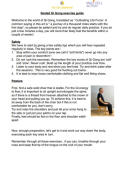
Seated Qigong Guide
This is a seated Qigong guide which focusses on posture, Neck, Shoulders and Spine.
Mindfulness, Mindful Breathing and Mast Cells
This guide explains the benefits of Mindfulness and breathwork and provides short exercises to try.
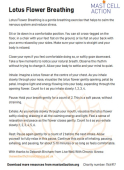
Lotus Flower Breathing
Lotus Flower Breathing is a gentle breathing exercise that helps to calm the nervous system and reduce stress. With thanks to Deborah Bircham from Live Well With Chronic Illness.
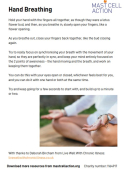
Hand Breathing
This simple breathing exercise has been provided to us by Deborah Bircham from Live Well With Chronic Illness.
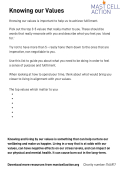
Knowing our values
Knowing our values is important to help us to achieve fulfilment. Use this guide to help you plan what you need to be doing in order to feel a sense of purpose and fulfilment.
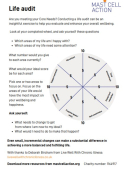
Life Audit
Are you meeting your Core Needs? Conducting a life audit can be an insightful exercise to help you evaluate and enhance your overall wellbeing.
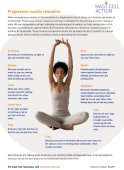
Progressive Muscle Relaxation for Adults
When we experience anxiety or stress, our muscles can tense up. Progressive muscle relaxation can help to alleviate this tension and promote a sense of calm.
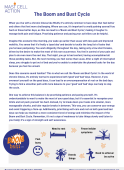
Boom and bust cycle theory for adults
In the world of chronic illness, it's entirely normal to experience both 'good' and 'bad' days. However, if you overexert yourself on the good days, it can lead to an overcompensation of rest on the bad days. Trying to find a smoother path with more balance to your ‘good’ and ‘bad’ days can help to stop the cycle.
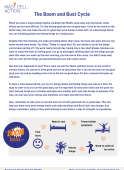
Boom and bust cycle theory for Kids
In the world of chronic illness, it's normal to have good and not-so-good days. But if you do too much on the good days, you can end up needing extra rest on the not-so-good days. It's like a seesaw that goes up and down.
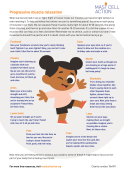
Progressive muscle relaxation
When we feel worried or are in 'fight, flight or freeze' mode, our muscles can become tight without us even realising it. To help ourselves feel calmer, we can try focusing on each group of muscles in our body.

Meditation by Deborah Bircham with music shanti by Annie Brunson
A short mindfulness practice for those feeling illness or discomfort
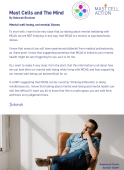
Mast cells and the mind
A PDF to support our session on mast cells and the mind by Deborah Bircham
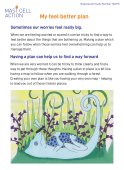
My Feel better plan
When we are feeling worried or scared it can be tricky to find a way to feel better about the things that are bothering us. Download and complete this plan which you can follow when those worries feel overwhelming.
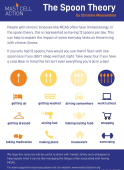
The Spoon Theory
People with chronic illnesses like MCAS often have limited energy. In the spoon theory, by Christine Miserandino, this is represented as having 12 spoons per day. This can help to explain the impact of some everyday tasks on those living with chronic illness.
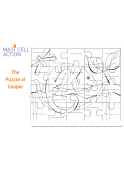
The puzzle of you
In the same way that a jigsaw is made up of lots of different pieces, each of us are madeup of lots of different parts too. This puzzle can help you to talk about MCAS being just one part of that puzzle.
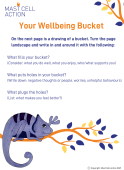
Your wellbeing bucket
An exercise to help children identify the things which make them feel good, those which don't and what helps them to feel better when things aren't going so well.
The puzzle of you
In the same way that a jigsaw is made up of lots of different pieces, each of us are made up of lots of different parts too. This jigsaw helps us to see that MCAS is just one piece of the puzzle.
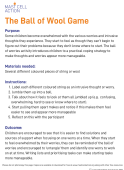
Ball of wool game
The ball of worries activity introduces children to a practical coping strategy to make thoughts and worries appear more manageable.
Become a friend
Sign up to become a Friend of Mast Cell Action so we can keep you up to date on our progress and on how to get involved in our latest campaigns and initiatives.
Donate
Mast Cell Action relies entirely on the generosity of people like you. Please make a donation now and together we can make a difference to those affected by MCAS.